Basque sculptor Jorge Oteiza is known for his conceptual theory of ‘emptying’ sculpture to create a spiritually charged nothingness. A central idea of this philosophy is that his work should act as a spiritual solution to existence and prompt the viewer to interact with the void. Oteiza sought to dematerialise sculpture by transitioning from solid mass to an ‘energy-statue’ that consisted primarily of space and energy. This concept was influenced by his study of physics and the notion of mass transforming into energy. From solid to void: Oteiza moved away from monolithic works and embraced geometric abstraction to explore emptiness. His focus shifted from the external, solid form to the internal, negative space. "Emptying the sphere": A key experimental process involved the ‘emptying’ of geometric shapes like the sphere and cube. By perforating or opening a form, Oteiza allowed light to enter and interact with the space inside, activating the void.
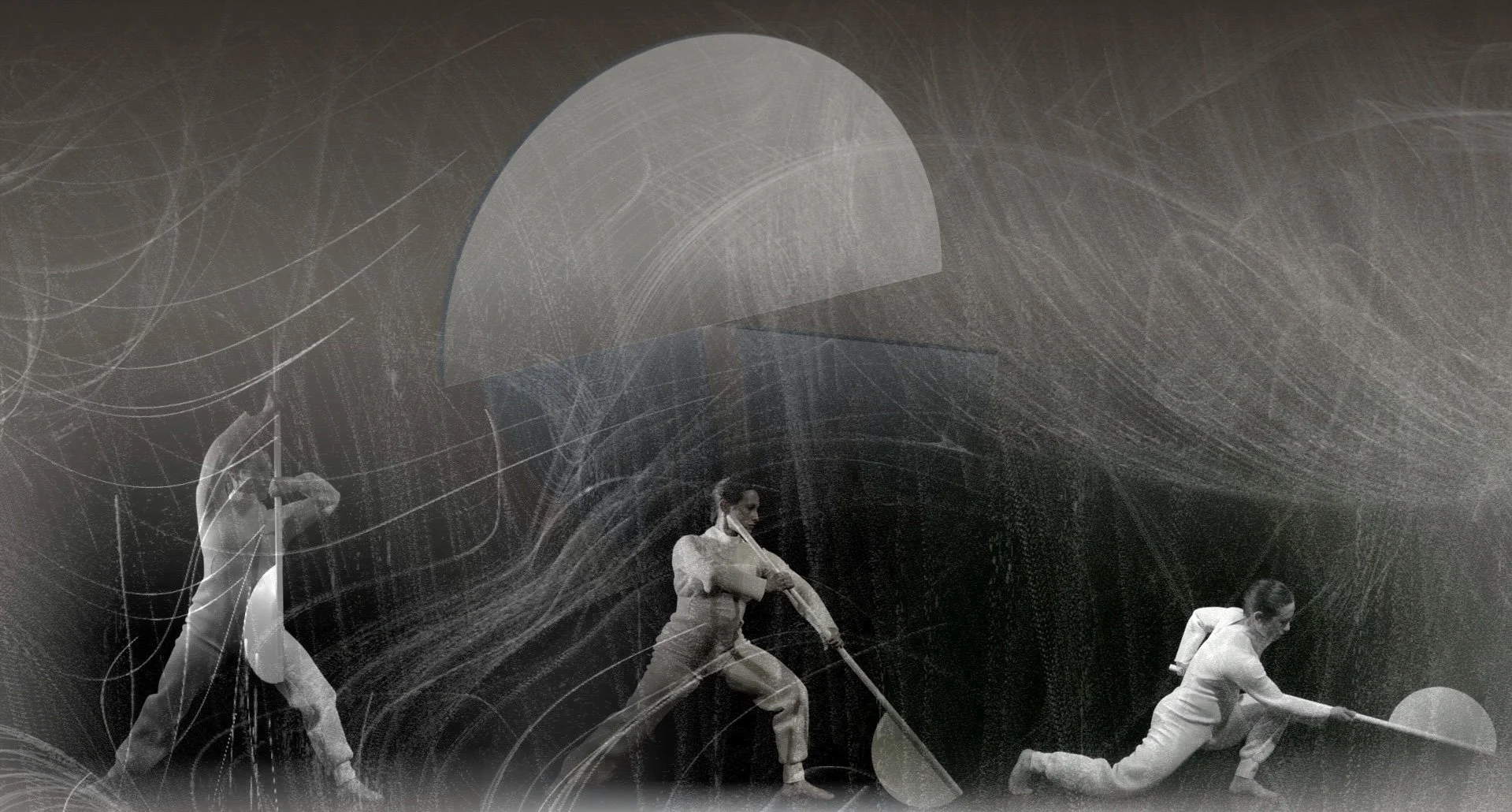
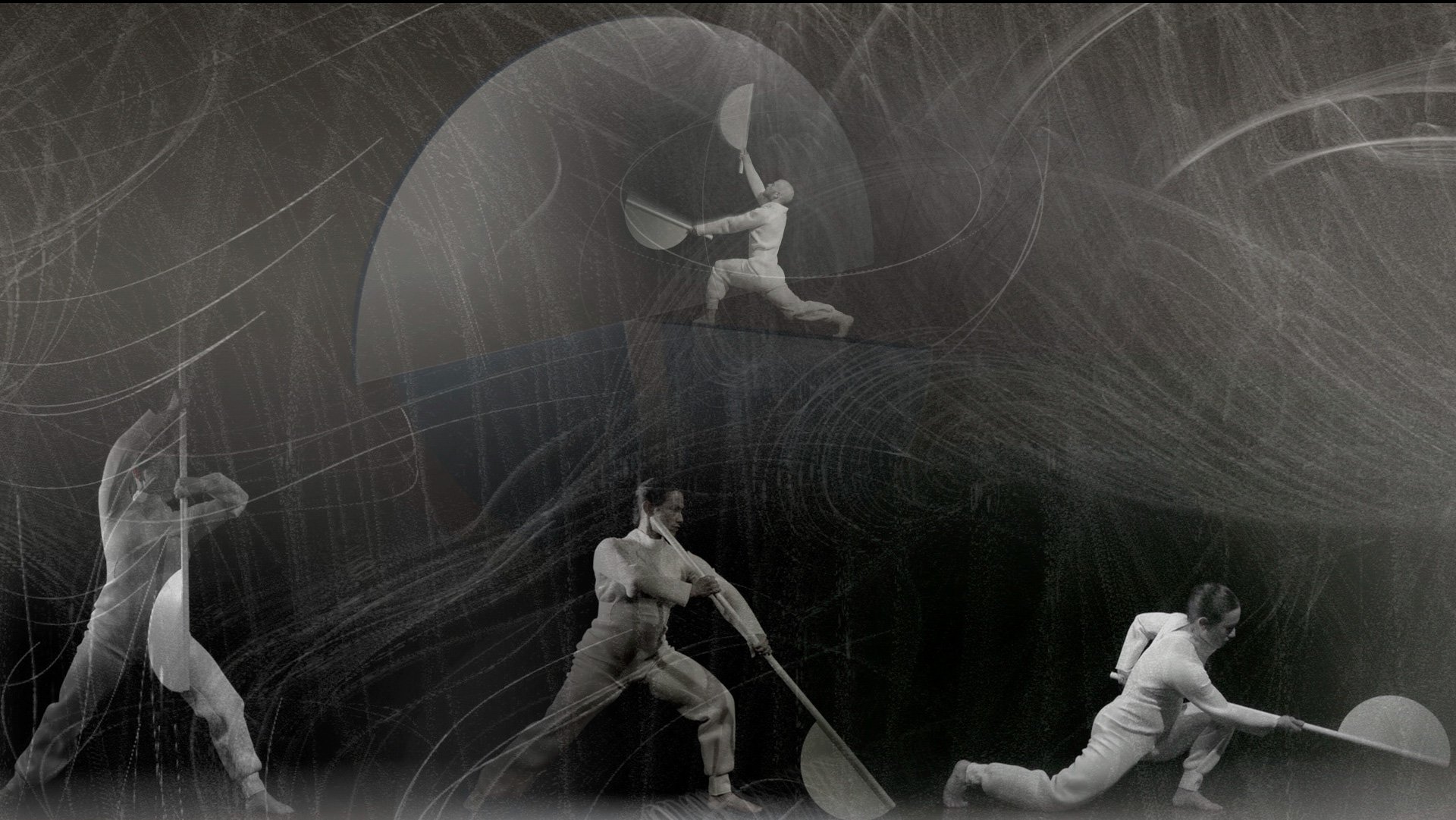
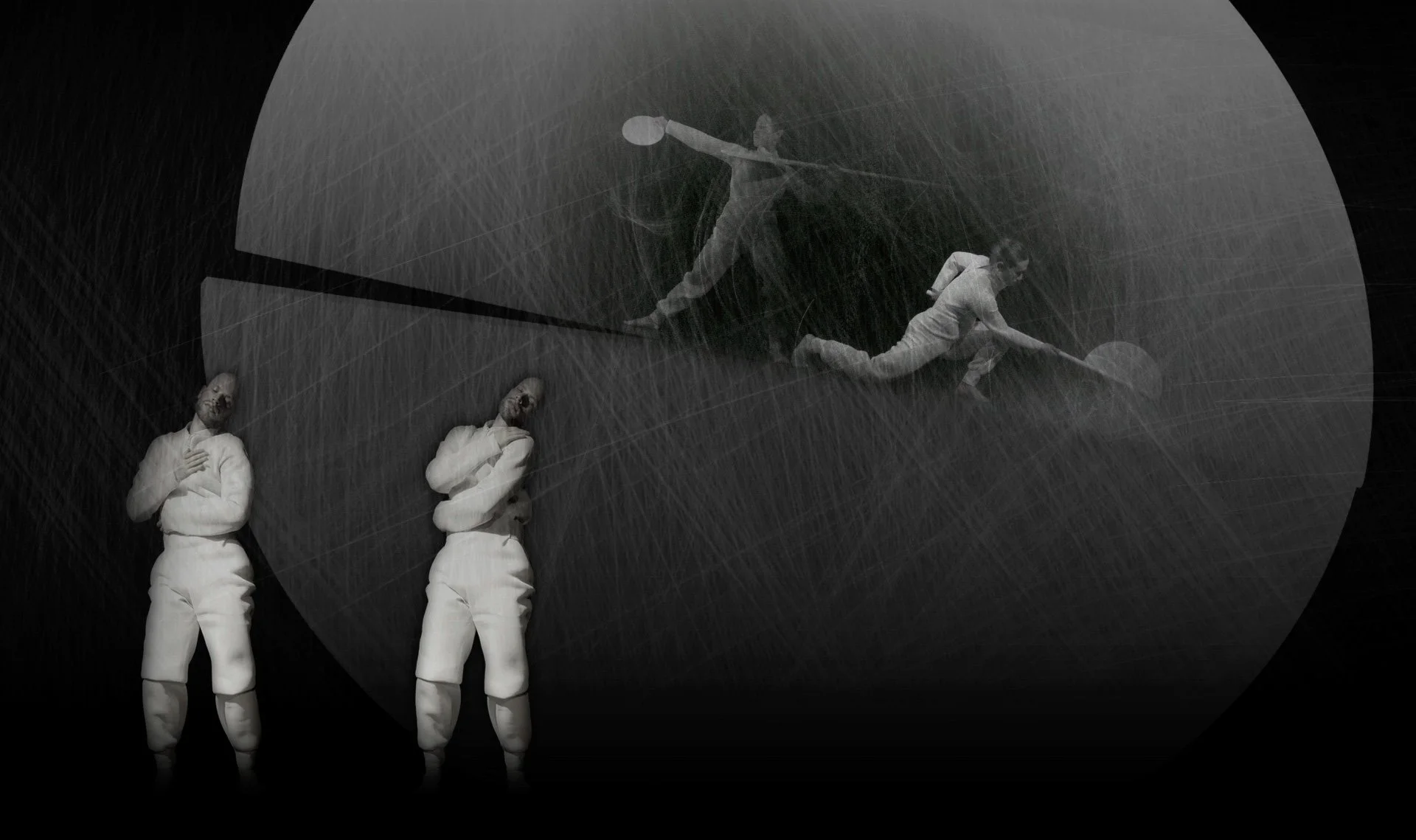
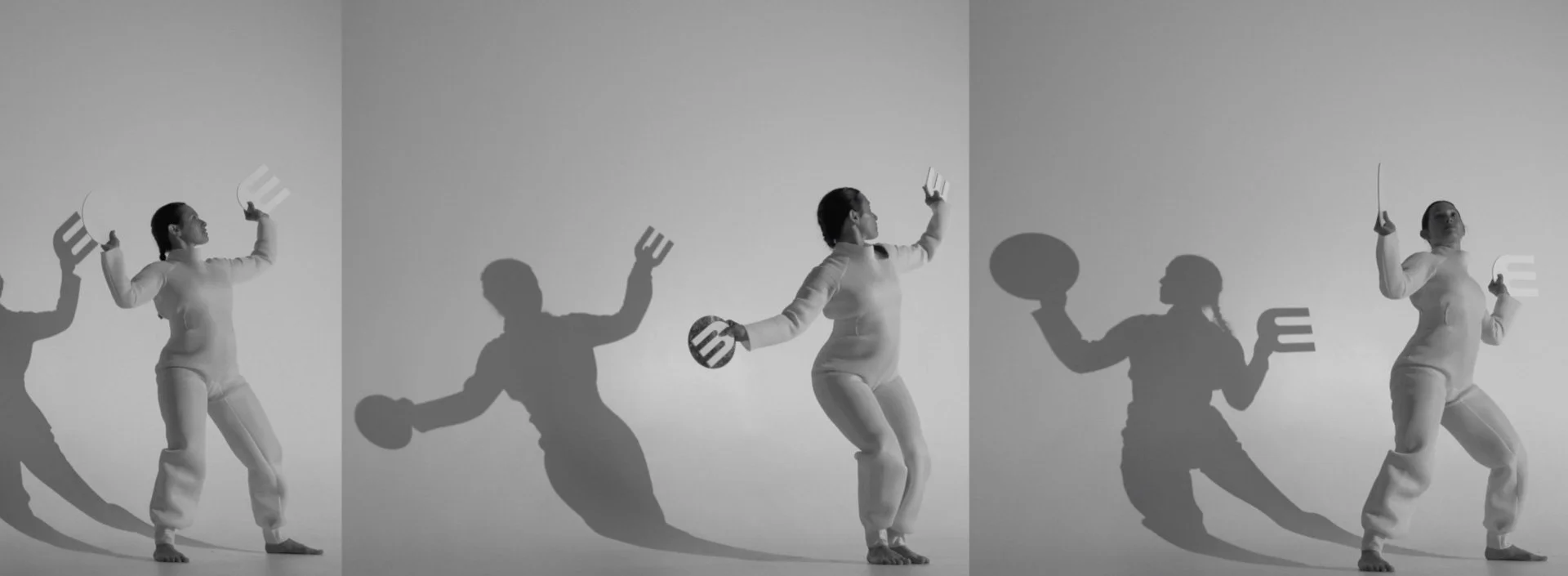
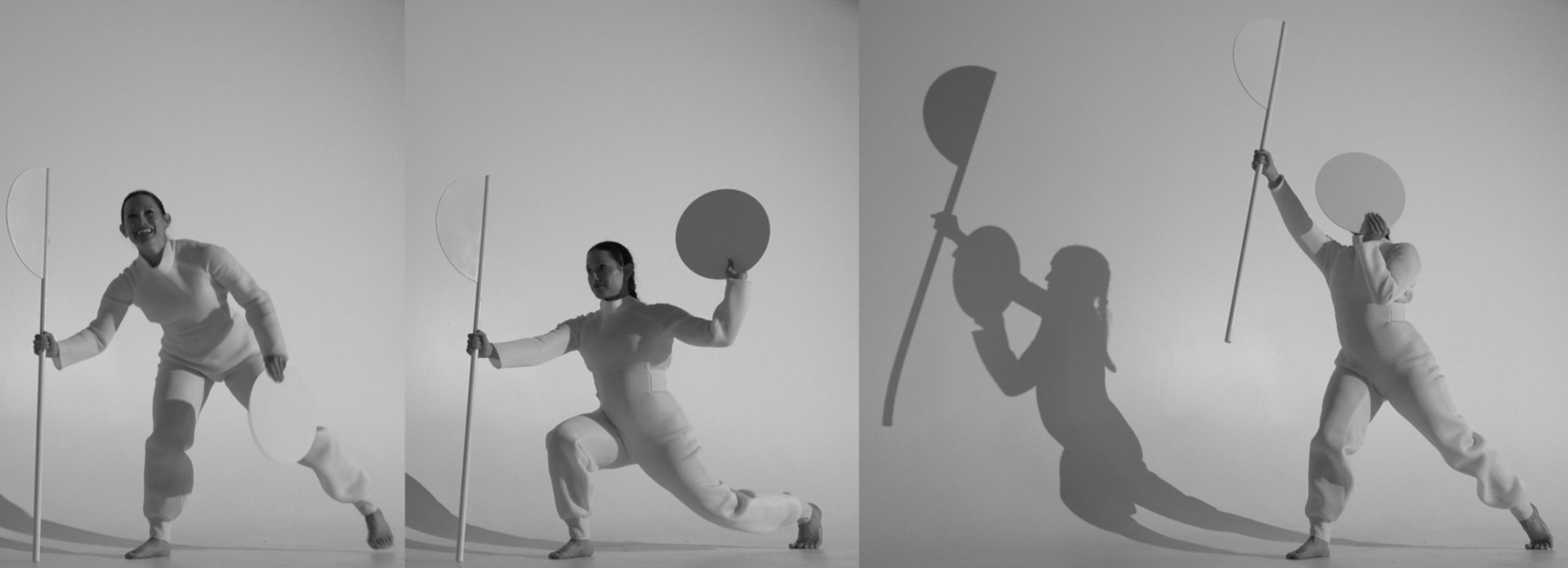
“In my practice, I employ what I term ‘Airstruments’ – hand-held objects that function as conductors between the analogue physical and the digital electronic. Unlike traditional theatrical props, which remain subsidiary to performer presence, ‘Airstruments’ operate as active transducers: they amplify the dancer's physical gesture while simultaneously bridging directly to the digital scenography. They create torsion within the architectural design language of the work – a responsive relationship where the virtual environment possesses a form of sentience, responding to and anticipating the performer's spatial negotiations. The Airstrument operates across scales - as intimate object held in the hand that echoes and activates architectural or environmental forms at macro scale, creating a visual and conceptual rhyme, suggesting the space itself is constructed through principles of resonance and correspondence. Drawing on Oteiza's concepts of de-occupation and re-occupation of space, these objects explore negative space, absence, and void with the dancer. The geometric reduction of the half-disc creates spatial ambiguity – is the object complete or incomplete? Does it occupy or vacate?
Our two research developments for the Encounter project have engaged artists from Aotearoa and the Basque Country, most recently bringing in Natalie Hona (Ngāpuhi) with existing and new 'Airstrument' design forms inside bespoke voidal studio film spaces of both black and white. Significantly, the white space harnessing the power of the analogue 'shadowing' of the figure in motion. There are scenes where dance artists Noy and Hona co-exist within the film realm, although these choreographic investigations took place over a year apart. I would like to thank Amit Noy and Natalie Hona for their beautiful work - also Juan José Eslava Cabanellas for his inspirational sonic compositions that combine traditional Basque instruments with taonga pūoro, and for his generous knowledge sharing about Jorge Oteiza through personal connection that reaches back to childhood in Pamplona. Big thanks to Zukan Trio, Alistair Fraser, Ariana Tikao, Ruby Solly, Patxi Araujo, Jac Grenfell, Stuart Foster, Creative Producer Donnine Harrison, and Aitziber Urtasun with Oteiza Museum. Ngā mihi nui Massey University Te Kunenga ki Pūrehuroa and Creative New Zealand toi Aotearoa for your tautoko at this time” Daniel Belton